When Lawson, a toddler, failed his newborn hearing screening, his parents experienced an unexpected journey navigating hearing loss with no previous family history or experience. After a short hearing aid trial, they realized Lawson needed cochlear implants to help support their son. Lawson now is exceeding expectations with both spoken language and American Sign Language (ASL). Read his journey below:
“Lawson was born with severe to profound hearing loss in both ears, he failed his newborn hearing test at the hospital, and his diagnosis was confirmed at his Auditory Brainstem Response test (ABR) when he was 5 weeks old. We have no known family history of hearing loss, which feels silly saying now knowing he inherited a genetic mutation called Waardenburg Type 2. Lawson has no other defining physical characteristics, nor do any of our family, so it was quite a shock.
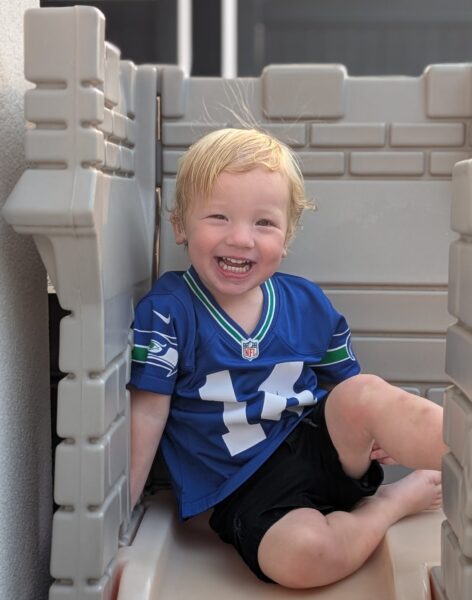 Early intervention with hearing solutions
Of course, every parent wants what is best for their child. Everything in our early reading, watching and consuming, was about the importance of wear time. Lawson was fitted for hearing aids at 3 months and started wearing them all waking hours. Thankfully, he never really seemed to mind or be bothered by them. I think I used to attribute his high wear time to how consistent we were with his hearing aids, but I think I have come to realize that sometimes with babies it can all come down to temperament.
Lawson quickly learned that taking his hearing aids out was the fastest way to summon me when he wanted something. If I was unloading the dishwasher and he wanted to be held, out came his hearing aids and that haunting feedback sound. Given his excellent hearing aid wear-time, it was no shock that he didn’t fuss too much when wearing his cochlear implant sound processors.
Lawson was implanted with a cochlear implant at 11 months1, activated at 12 months and was speaking his first words five months later. Lawson exclusively used HugFit’s™ initially. This worked great, but when he started daycare, it became obvious that headbands were going to be easier. Now he wears hug fits on the weekends and headbands at daycare. Just recently he started putting his magnet back on himself, unsurprisingly as we are deep in the ‘me do it’ stage.
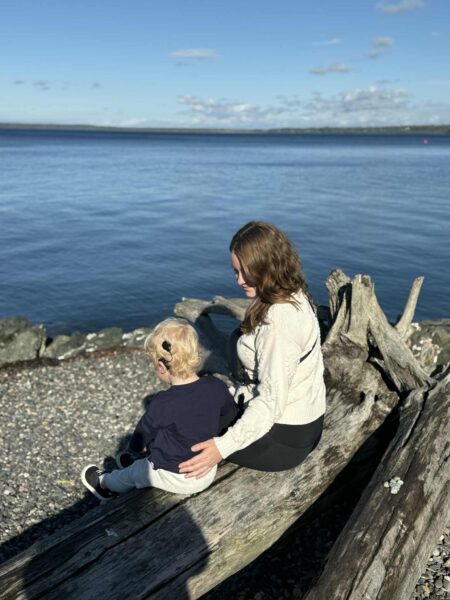 Exceeding language milestones
Lawson had 18 spoken words by 18 months, and an additional 25 ASL signs, and has continued smashing all of his language milestones ever since. Lawson is now 2 and a half, talks seemingly constantly and really enjoys listening to stories in any format he can get.
He listens to stories on his Toniebox and podcasts in the car. I really believe that this, along with the talking and reading he is surrounded by, has made a huge difference in his rehabilitation. He is often right on track or slightly ahead of his hearing peers at various assessments. I am truly so proud of him and his progress. We continue to enjoy weekly ASL classes.
Choosing Cochlear® technology
I think everyone knows or assumes that choosing a company when implanting your child is a massive decision, and even as someone who loves data and information, I too found it exceedingly overwhelming. It felt as though I needed an electrical engineering or neurology background to fully understand the nitty gritty of the differences between each brand.
I ultimately decided to take a step back, realize that Lawson will know no-difference between the options as its all he will have ever experienced, trust that he will succeed no matter the option and focus on what impacts us. Cochlear was the choice because of how prevalent it is in Canada and the United States. Specifically, if he was to meet someone with a cochlear implant (CI) ‘in the wild’ they would likely look similar. I also considered how comfortable our audiologist was with the programming and how many parents on social media raved about the quality of their customer service.
 Using technology in everyday life
Lawson is of course only 2, but we have put him in quite a few organized toddler sport programs, and he seems to really enjoy it. We have noticed how helpful the mini microphone can be in this scenario (especially during the winter when things move into an indoor gymnasium). I think most toddlers aren’t truly listening to the coach at this age, but I can repeat the instructions into the mini microphone which really seemed to help. Once we started trying this, we did notice he seemed more confident.
Lately he is enjoying a quiet start to his day, often asking for no ears until well after breakfast. This works as time to practice our ASL – our family goal is to be proficient in both spoken and ASL with the view of giving him all the tools to succeed in whatever way that looks for him.
Our daycare has been an absolute dream, completely transforming the room he is in with soundproofing to prevent echoing and adding ASL graphics throughout both the indoor and outdoor spaces. Lawson’s daycare teachers, in addition to his early interventionist, his audiologist, his deaf mentor/ASL teacher and his speech language pathologist have been absolutely magic. We feel very supported.
Advice for new parents
As a new mom, and to a child with hearing loss, I found myself hyper fixating on language development. I found myself diving into books, social media and podcasts. I was very fortunate to be paired with an experienced early interventionist who knew I valued information and was happy to supply me with same. I felt like I couldn’t hold a conversation with another adult without bringing language acquisition up, and I do wish (with the beauty of hindsight) that I just relaxed and trusted the process a little more.
He is doing amazing and while I do believe this is partially because of his parents and their dedication to his success, I also think it’s because he has the right equipment and the appropriate team monitoring him and supporting him.”
If you’re the parent of a child with hearing loss, cochlear implants may be a helpful early intervention solution. Learn about your options as a parent today!
2- In the United States and Canada, the Cochlear Nucleus Implant System is approved for use in children 9 to 24 months of age who have profound sensorineural hearing loss in both ears and demonstrate limited benefit from appropriate hearing aids. Children 2 years of age or older may demonstrate severe to profound hearing loss in both ears.
- All rights reserved – tonies® ©2026