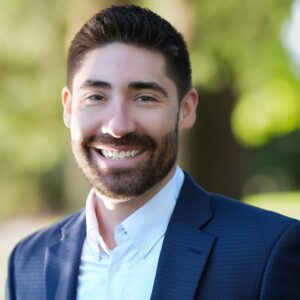
Daniel, a bilateral Cochlear™ Baha® System recipient has gone through many experiences in his hearing journey including academic challenges, device loss and success as a music teacher and performer. Learn more about his journey here:
“My name is Daniel, a Filipino- American and I am a bilateral Baha System recipient currently using the Baha 6 Sound Processor. My history with Cochlear technology spans back to 2008 with the Baha Divino Sound Processor, BP100 Sound Processor and most recently the Baha 5 Sound Processor. I have consistently been impressed with the features and functionality of Cochlear devices, which have profoundly enhanced my ability to engage with the world around me.
 A setback that led to success and realization
However, I recently experienced an unexpected challenge that has never happened in my time utilizing these hearing solutions – a missing device. During parts of the last year, I have been without a functioning Baha 6 Sound Processor due to its loss.
This period culminated in the demanding experience of defending my bachelor’s degree thesis in Anthropology entirely unaided, relying on lip-reading my panelists and utilizing a live transcriber application to navigate questions. Despite this significant hurdle, I am proud to share that I successfully passed and graduated this past July. This experience truly underscored the resilience and adaptability that Cochlear technology has helped me cultivate over the years.
Pursuing my passion for music with the Baha System
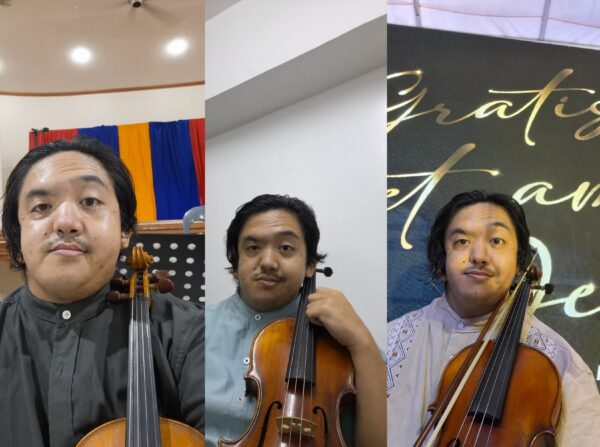
Beyond my academic pursuits, music is a central part of my life. For the past two years, I have been a dedicated violin teacher, working with students in after-school programs and music classes at various schools. I also actively perform at concerts, recitals and other programs, often doubling as both a violinist and violist. My Baha 6 Sound Processors have been instrumental in allowing me to pursue my passion for music, both as an educator and a performer.
The art of “blending in”
A unique part of my history involves my 2011 custom-made bilateral ear prosthetics created by Dr. Robert Barron, a famed anaplastologist in Virginia. Before dedicating his career to medical prosthetics, Dr. Barron worked for the CIA as a disguise specialist. Having a set of ears designed by a ‘master of disguise’ was not just an aesthetic upgrade—it was a conversation starter and a reminder that reconstruction can come from the most unexpected places.
My personal journey has made me a passionate advocate for Ally’s Act (H.R. 4606 / S. 3400). This bipartisan legislation was inspired by Ally Tumblin and championed by her mother, Melissa Tumblin, the founder of the Ear Community organization. For too long, private insurers have used loopholes to deny coverage for osseointegrated hearing devices, treating them as elective rather than the medical necessity they are.
Ally’s Act is designed to close this gap, ensuring that private insurance covers:
- The initial Baha or Cochlear Implant (CI) device.
- Essential upgrades and replacements every five years.
- The costs of the implantation surgery and necessary accessories like softbands.
- Post-operative care, fittings, and vital aural therapy services.
Melissa and the Ear Community work tirelessly with these institutions to prove that access to sound is essential for a high quality of life and meaningful contribution to society.
A Message to Others
I recommend the Baha System to anyone navigating hearing loss. My own personal wins—both in the classroom and on the concert stage—highlight the transformative power of staying connected to sound. By supporting initiatives like Ally’s Act, we can ensure that every child and adult has the same opportunity to thrive.”
If you or a loved one is experiencing hearing loss the Baha System may be able to help you on your hearing journey, just like Daniel. Learn more about Cochlear’s bone conduction solutions here.
1- In the United States and Canada, the placement of a bone-anchored implant is contraindicated in children below the age of 5.