The delivery room should have been filled only with joy and excitement. Instead, Lindsey and Ryan found themselves confronting an unexpected reality: their newborn daughter Brooke had been born with microtia and atresia. While they cradled their beautiful baby girl, many questions immediately filled their minds: What did this mean for her hearing? For her development? For her future? Learn more about Brooke’s hearing journey below:
“Like many, our journey with microtia/atresia started in a very vulnerable place – the delivery room. Exhausted, eager, and full of emotion, we were told that our 2-minute old, 5-pound 9-ounce daughter, Brooke, was missing a right ear. There in the delivery room, the full meaning of having a daughter with an underdeveloped right ear did not sink in, nor did the reality that our first-born was hearing impaired.
While the healthcare team surrounding us was gracious and helpful, they were not equipped with any answers on Brooke’s condition. We were told to ‘call the audiology department’ after getting home in the coming days to book an appointment. The words ‘microtia/atresia’ were not said in the hospital or by any provider but were sprinkled all over our late-night and fear-induced Google searches in the early days of bringing Brooke home.
After many phone calls with groups like the Ear Community, New Jersey Early Intervention, and other local audiology teams, we were led to speak to many parents and caretakers of children with microtia.
Throughout these conversations, we kept hearing about ‘the Cochlear® Baha® Start’ – knowing little to nothing about this hearing solution and how it could help our daughter. Through countless tear-filled conversations with parents who stood in our shoes years prior with their own children, the theme became very clear that we needed to get Brooke the Baha Start solution1.
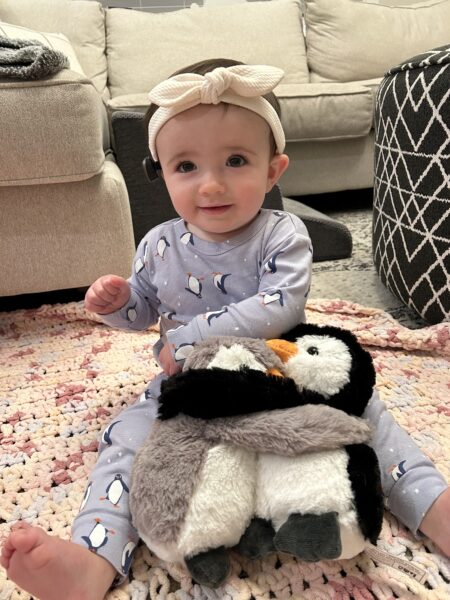 Becoming patient navigators: early days of grieving and advocacy
As brand-new parents, this became our new mission. Looking back, these early days felt like a blurred marathon. We were two new parents, quickly turned patient navigators, thrust into this newfound world of hearing loss. When we weren’t on the phone with parent support groups, volunteers, providers and our insurance company, we were quietly grieving the ‘normal’ or expected road we thought we would be on at this stage. Enjoying newborn snuggles and relishing in baby bliss was laced with a profound, underlying anxiety that dominated the first couple weeks of Brooke’s life.
Our relentless research brought us to the Big Apple, more specifically, New York Eye and Ear Infirmary of Mount Sinai (NYEE). We learned through parent support groups that this clinic had experts in the field who were very familiar with microtia and atresia. We made an appointment for Brooke to have an auditory brainstem response test (ABR) to determine the severity of Brooke’s hearing loss.
The ABR test confirmed Brooke’s profound hearing loss, and her audiologist introduced us to the Baha System – a bone anchored hearing solution. This was the first time a healthcare professional had mentioned the solution to us.
We trusted the audiologists recommended path, and it was then that Brooke was fitted with a ‘loaner’ Baha Sound Processor and Baha Softband while her customized device was ordered. While it was difficult to tell the immediate impact from an infant just a few weeks old, I breathed out the first deep sigh of relief in what felt like years at the time. My chest was a little less tight after this appointment and receiving the Baha Start, even as a loaner, was a much needed ‘small victory’ in the books for us as parents on this path.
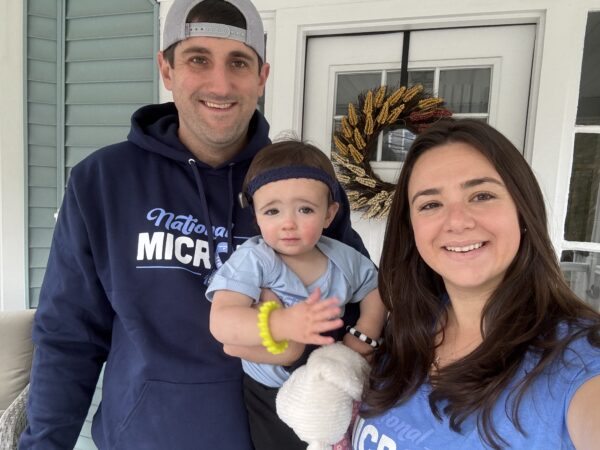 Building confidence and community with the Baha System
Brooke’s Baha Start solution quickly folded into our daily routine. When she woke up from her many daily naps, we would slip it onto her head before proceeding to the next task, which in those days was a lot of tummy time, contrast cards and rocking on our front porch in the warm summer evenings. We wore it in the stroller as much as possible, and out and about as we took walks around our neighborhood.
Questions and double-take glances occurred with those taking a peek at this brand new, beautiful and beaming baby. We would watch as parents and see the wheels turning from those in front of us – their faces gave the appearance of: ‘What is that on her head? Haven’t seen that before?’ It was in these moments that we filled in the blanks, explaining to everyone that we met the purpose of her Baha System and why Brooke was wearing it.
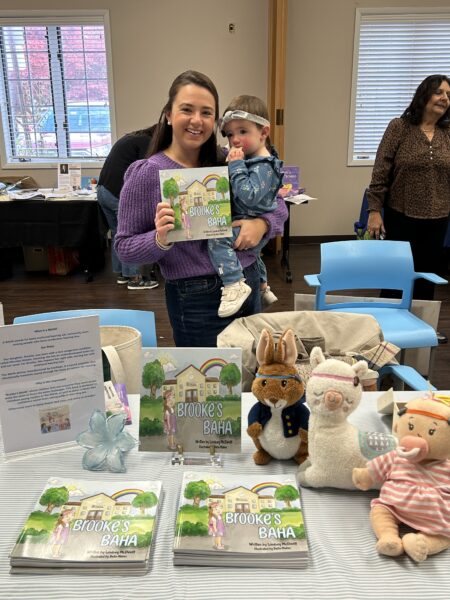
Through repeated introductions, we gained our confidence in this elevator pitch on the Baha Sound Processor and Baha Softband. In realizing that these conversations would occur throughout Brooke’s childhood, I felt inspired to write a children’s book called ‘Brooke’s BAHA’. This easy-to-read book narrates the story of Brooke as a little girl explaining the basics behind the Baha Start to her classmates. Not only would this be a useful tool for all Baha Sound Processor wearers but a way to inspire confidence in these children by seeing a character they could relate to.
 Advocating for change: Ally’s Act and legislative efforts
Explaining the use of the Baha Sound Processor and Baha Softband to educators, classmates and members of our community is far from the only goal in mind. My husband, Ryan, a healthcare lobbyist working in the pharmaceutical sector has partnered with Melissa Tumblin, Founder & Executive Director
of the Ear Community, to advance a piece of bipartisan federal legislation called ‘Ally’s Act’ – named after Melissa’s now 16-year-old daughter with microtia-atresia.
Ally’s Act H.R. 4606 was reintroduced in July 2025 and ensures that private insurance companies provide coverage for Osseo-integrated hearing devices (“OIDs”), including Bone Anchored Hearing Aids (“BAHA”) and Cochlear Implants (“CIs”) for both children and adults from birth to age 64, including the appointments and associated costs and services that come along with these hearing devices.
Led by Melissa, Ryan and a group of passionate volunteers and lobbyists in the hearing loss space have advocated on Capitol Hill in Washington, D.C. They continue to meet with members of Congress and their staff in hopes of having this bill passed.
Finding community through Cochlear
Through the Baha Start solution we have found a hearing solution for our daughter, but we have also found a community through Cochlear. The parent network and volunteer coordinators have been amazing support channels for our family.”
Whether you’re just beginning your journey with a microtia and atresia diagnosis or seeking ways to support families navigating congenital hearing differences, there are meaningful ways to take action today.
Learn more detailed information about your options and how The Baha Start solution may provide your child with access to sound and spoken language development.
2 3 4- In the United States and Canada, the placement of a bone-anchored implant is contraindicated in children below the age of 5.
- ©2026 Google
- Copyright © 2026 Ear Community a charitable nonprofit organization
- ©2026 Icahn School of Medicine at Mount Sinai