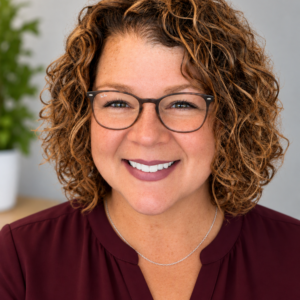
As another school year begins, Katie reflects on preparing her daughters to go back to school with cochlear implants and hearing aids and how confidence, self-advocacy, and open conversations have helped them feel proud of their hearing journeys. In this article, Katie shares practical ways families can help children prepare for a successful school year, encourage understanding among classmates, and create a supportive environment where every child feels understood, included, and confident.
Growing Confidence, One Step at a Time
“I like the way my white processors show up against my hair because I can show them off better.”
That was the response I received from my then seven-year-old daughter, Mila, when I asked whether she preferred wearing her white or brown pair of Cochlear® Nucleus® 7 Sound Processors.
My heart felt full hearing that.
As parents, we all want our children to embrace what makes them unique, and hearing Mila say she wanted her sound processors to stand out made me so happy because I knew she was proud of them.
At the time, she loved decorating her sound processors with colorful decals and sparkly retention headbands that made them impossible to miss. You could spot them from across the room—and that’s exactly how Mila liked it.
Today, as she gets ready to start fifth grade, her style has evolved. The sparkly headbands and decals have been traded in for simple white processors (with the occasional gem she sticks on) and double-sided tape for retention. Some days her white processors and coil sit on top of her hair and other days they’re tucked underneath. But now it’s less about whether people notice them and more about whatever hairstyle she’s chosen that morning.
Even more special is watching her help instill that confidence in her younger sister, Sofia, who also has hearing loss and uses hearing aids. Mila helps Sofia pick out colorful retention cords and decide which bright earmold colors will look the coolest. Sofia loves showing off her hearing devices, too.
A big part of their confidence is simply who they are. But I’d also like to think that it comes from the environment we’ve worked hard to create around them. From the very beginning, our family, along with our incredible Teacher of the Deaf and Hard of Hearing and speech therapists, has consistently reinforced the same message:
Your hearing devices are one part of what makes you uniquely you, and they’re something to be proud of.
That confidence didn’t happen overnight. It’s been built little by little over the years through encouragement, advocacy, and helping our girls understand both their hearing journeys and the amazing technology that helps them hear
Helping Classmates Understand
As we prepare for another school year, we’ve worked with their school to ensure they both have IEPs (Individualized Education Program) in place for Hearing/Speech services, along with accommodations such as a remote microphone FM/HAT (Hearing Assistive Technology) system, preferential seating, repeated directions when needed, listening breaks, and simple classroom modifications to reduce background noise. Our Teacher of the Deaf and Hard of Hearing also partners with teachers each year to provide training and share strategies to support Mila and Sofia throughout the school day.
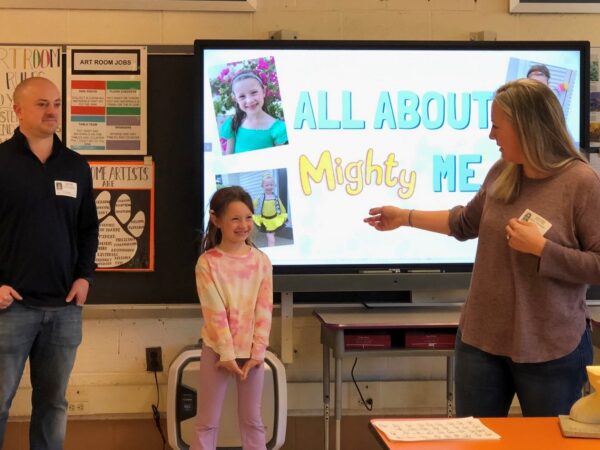
While these different types of support are incredibly important, one tradition has made an equally meaningful difference for Mila and Sofia, as well as their classmates and teachers: a classroom presentation where they share about who they are, their hearing journeys, and the devices that help them hear.
At the beginning of each school year, we work with our daughters’ teachers to set aside about 30 minutes for the girls to share their hearing journeys and devices with their classmates. We’ve done this since preschool, and in the early years, it was usually me, my husband, or their Teacher of the Deaf doing most of the talking. As the girls have grown, they’ve gradually covered more of the presentation themselves.
Now, Mila proudly stands in front of her class explaining what hearing loss is, how cochlear implants work, why her teacher wears a remote microphone, and simple ways her classmates can be good friends. Sofia is still building her confidence, but each year she shares a little more.
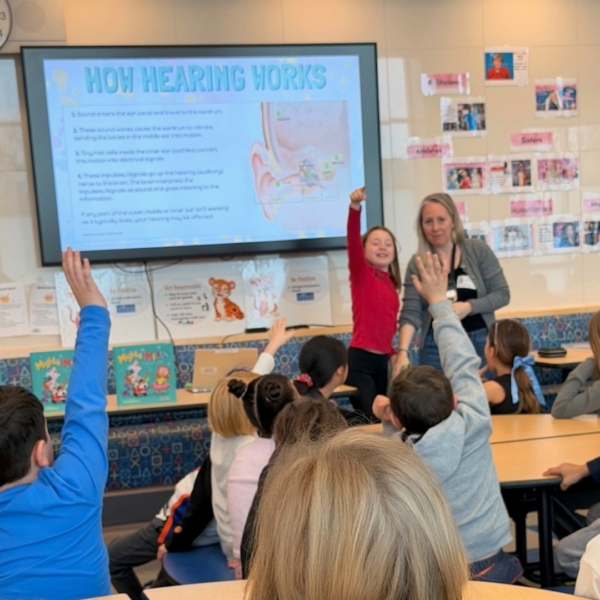
These presentations have made such a difference by opening up constructive conversations. Their classmates are naturally curious and giving them the opportunity to ask respectful questions, removes the mystery and helps them become allies who genuinely want to support Mila and Sofia. They learn why it’s important to face them when speaking, why saying “never mind” instead of repeating something can be hurtful, and why mumbling or covering their mouth makes communication much harder.
For our girls, these presentations have been incredibly empowering. Rather than having someone else explain their hearing loss, they are the experts on their own experiences. They get to tell their own story and share something special about themselves.
One thing we’ve also found especially helpful is to begin or end the classroom presentation by reading a children’s book featuring a Deaf or Hard-of-Hearing main character. These stories help create more understanding and empathy and often spark additional questions that lead to meaningful conversations.
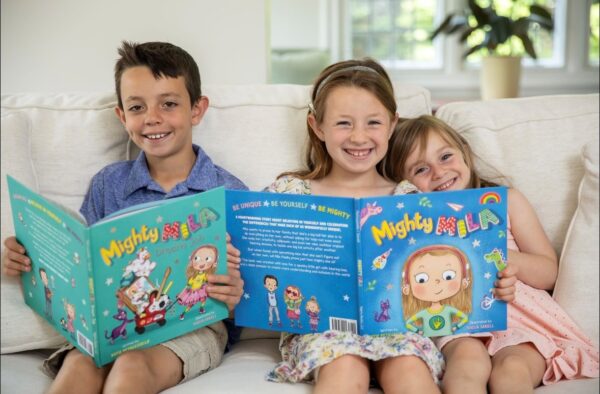
That’s one of the reasons I wrote the Mighty Mila series. I wanted my daughters, and other Deaf and Hard-of-Hearing children, to see themselves reflected in books while also creating stories that resonate with children of all hearing abilities. My hope has always been that the Mighty Mila books help children celebrate differences, build understanding about hearing loss and hearing technology, and remind every child that the things that make us different are also what make us wonderfully unique.
Today, visiting schools to read Mighty Mila, answering students’ questions about hearing devices and sign language, and watching curiosity turn into understanding has become one of my favorite parts of being an author.
Making It Easier for Other Families
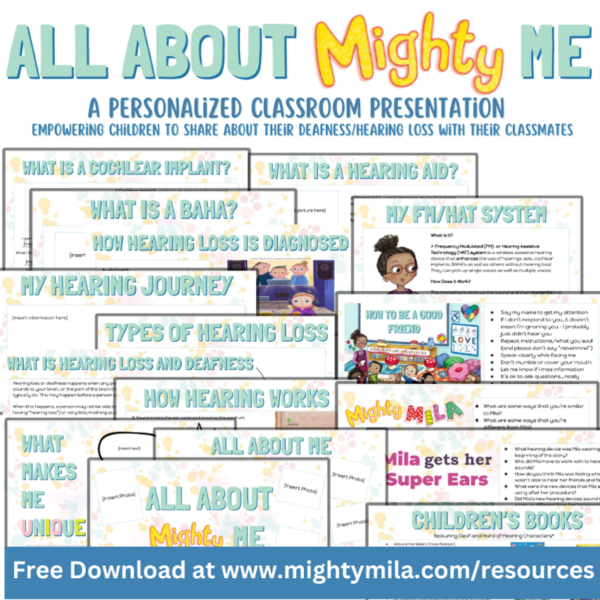
Because these classroom presentations have been so meaningful for our family, our Teacher of the Deaf and I wanted to make it easier for other families to do the same.
Together, we created a simple, editable ‘All about Mighty Me’ classroom presentation template that families and educators can customize with their own child’s photos and story. We hope it helps more children start the school year feeling understood, supported, and proud of who they are.
If it would be helpful for your family, you can download it from the free Resources section on my website: www.mightymila.com/resources.
For our family, these classroom presentations have become one of our favorite back-to-school traditions. They’ve helped our daughters begin each school year feeling confident, understood, and empowered to share their stories. My hope is that the ‘All About Mighty Me’ classroom presentation template makes it easier for other families to experience the same thing.
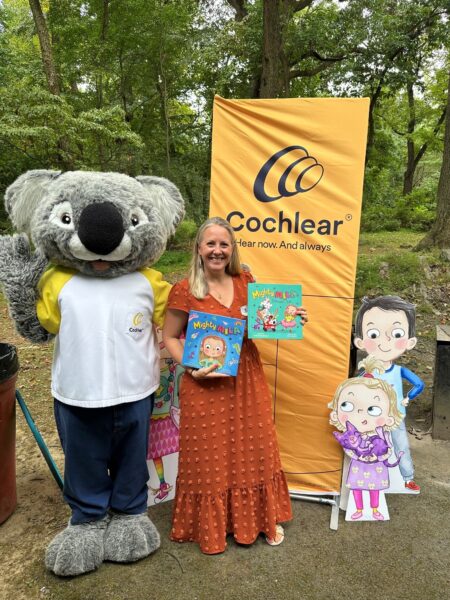
Visit www.mightymila.com/resourcesto download the free All About Mighty Me classroom presentation template, explore family and classroom resources, and discover the multiple award-winning Mighty Mila book series.
Want to follow along? Katie invites you to connect with @mightymilastories on Instagram or @mightymila on Facebook for a closer look at her family’s journey and see sneak peeks at what’s coming next.
For more information on helpful school resources, visit Cochlear’s website.