Born with otosclerosis, Bernadette experienced progressive hearing loss that eventually led to profound bilateral sensorineural hearing loss. After hearing aids no longer provided enough benefit, she chose the Cochlear™ Nucleus® System and regained access to conversations, family moments and everyday sounds. Read her story:
“I was born with otosclerosis, a hereditary condition that hardens the bones of the middle ear and may cause progressive hearing loss. Still, I didn’t realize I was losing my hearing until I was 25, when a supervisor suggested I get it checked. Looking back, I experienced mild tinnitus since childhood, but I didn’t know any other reality.
After my diagnosis, I wore hearing aids for several years. They helped but not enough. At my wedding, my husband carried much of the conversation because I couldn’t keep up due to background noise. Later, during pregnancy, high estrogen levels accelerated my hearing loss and I lost most of the hearing in my right ear.
I adapted as best I could. I raised my daughter, earned my M.Ed., and continued working in higher education in assistant roles supporting vice presidents and deans. My colleagues were supportive, but the world kept getting quieter. Everyday tasks became harder. Over time, I began to feel like I didn’t belong in my own life.
 When hearing aids were no longer enough
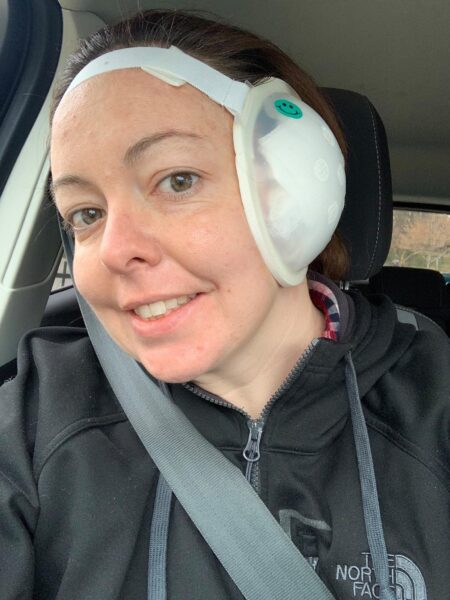
One day at work, I picked up the phone and couldn’t hear the dial tone. That moment pushed me to look into cochlear implants. At 35, I was diagnosed with profound bilateral sensorineural hearing loss due to advanced otosclerosis. The disease entered my inner ear, damaging my cochlea. In ten years, I went from a normal hearing range to profoundly deaf. Hearing aids no longer helped, and I was exhausted from trying to keep up.
My audiologist explained that cochlear implants could restore access to what I had been missing: voices, music, my daughter’s recitals and plays and even everyday sounds like rain. For the first time, it felt like there was a way forward.
Why I chose cochlear implants
When I explored options with Cochlear, one item stood out immediately: the Aqua+ accessory1. The idea of hearing in the water mattered more than I expected. Before, I had to sit on the edge of the pool while my daughter swam so I could understand her. I missed some of the spontaneous and quick ‘look at me!’ moments that make up childhood.
About six months after receiving my second cochlear implant, we took a trip to Walt Disney World®. One afternoon, we were in the condo pool together, talking and laughing with ease. At one point, my daughter told me it was her favorite part of the entire trip. She said she missed being able to joke around with me like that. She was 8 years old, the apex of childhood. That moment stayed with me. With the Aqua+ accessory, I wasn’t watching from the sidelines anymore. I was fully there with her.
 Helping others navigate hearing loss
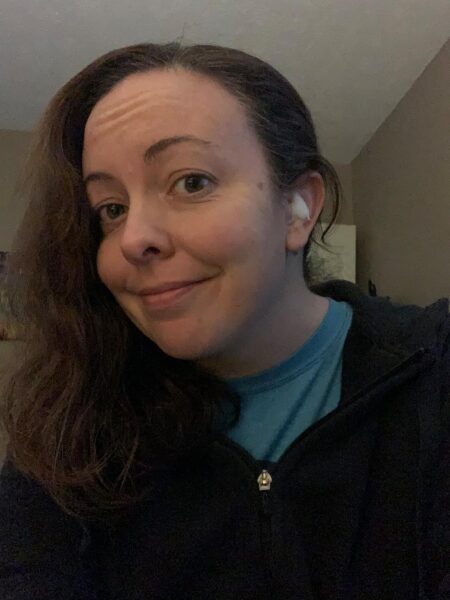
Since receiving my cochlear implants, daily life has become more accessible in ways both big and small. Using accessories like the TV streamer allows me to watch movies with my family without relying entirely on captions. More importantly, I can have conversations while driving. Some of the most meaningful conversations with my children happen in the car, in between activities. Being able to hear them without turning around has made a significant difference in staying connected and supporting them in real time.
The Nucleus Smart App2 has also become part of my routine. Features like processor tracking help during busy days when things get misplaced, and ForwardFocus3
helps reduce background noise in environments like restaurants. These tools make everyday situations much more manageable.
What stands out most, however, is the return of independence. I can stream music, podcasts and audiobooks while doing repetitive tasks or chores throughout the day. I talk on the phone with family across the country. I engage more fully at work, including leading presentations in classrooms and participating in Q&A sessions with confidence. These are things I once questioned whether I would ever be able to do again.
Sharing hope with others
Because of this journey, I wrote a memoir, Whispering Hope through Hearing Loss to share my experience and advocate for others, especially those who are late-deafened. Without a connection to the Deaf community early on, it is easy to feel isolated and unsure of what support exists. There are more options, technologies and accommodations available today than many people realize. Throughout these past few years, Cochlear’s customer service greatly helped me navigate obstacles, quickly getting me back to enjoying life.
The Nucleus 7 Sound Processor was the right path for me, but more broadly, I want people to know that hearing loss does not have to mean disconnection. With the right tools and support, it is still possible to live an active, engaged life.
I’m looking forward to upgrading to the Nucleus 8 Sound Processor for the Auracast™4 option which will allow me to stream at theaters, airports and conference centers. This feature will reduce anxiety surrounding group outings in personal and professional settings.
Now, I can listen, respond and support the people around me. I can help others in ways I once needed help! More importantly though, I can share in everyday moments with those I love, and I no longer feel like I am watching my life from the sidelines.”
If you’re experiencing hearing loss like Bernadette, learn how the Cochlear® Nucleus® System may help you stay connected to the people and moments that matter the most.
5 6- The Nucleus 7 Sound Processor with Aqua+ is water resistant to level IP68 of the International Standard IEC60529. This water protection means that the sound processor with the Aqua+ can be continuously submerged under water to a depth of 3 meters (9 ft and 9 in) for up to 2 hours. This water protection only applies when you use a Cochlear Standard Rechargeable Battery Module or Cochlear Compact Rechargeable Battery Module. The Nucleus 7 Sound Processor is water- resistant without the Nucleus Aqua+ accessory to level of IP57 of the International Standard IEC60529 when used with rechargeable batteries.
- Nucleus Smart App is available on App Store and Google Play. For compatibility information, visit www.Cochlear.com/compatibility.
- ForwardFocus is a clinician-enabled, user-controlled feature within Custom Sound Pro Fitting Software. ForwardFocus can only be enabled by a hearing implant specialist. It should only be activated for users 12 years and older who are able to reliably provide feedback on sound quality and understand how to use the feature when moving to different or changing environments. It may be possible to have decreased speech understanding when using ForwardFocus in a quiet environment.
- Auracast™ broadcast audio capability is subject to third party adoption of the Auracast protocol.
- The Bluetooth® and Auracast™ word mark and logos are registered trademarks owned by Bluetooth SIG, Inc. and any use of such marks by Cochlear is under license.
- © Disney, All Rights Reserved