Music wasn’t just something I enjoyed—it was part of who I was. For a long time, I put off getting a cochlear implant. But eventually, I took the step—and it changed everything. Not only could I hear speech more clearly, but I also began reconnecting with something I thought I’d lost forever: the piano.
“Hello, I’m Julie! I’m 73 years old, a retired language and music teacher, and I live north of Montreal. For most of my life, music wasn’t just something I enjoyed — it was part of who I was. I majored in piano performance in university. But everything changed when I contracted rubella, or German measles. I started to lose my hearing gradually at the age of 24, and by age 30, I was confusing consonants. By the age of 55, I needed two hearing aids.

At age 72, when my hearing aids were no longer helping me, I was told that I qualified for a cochlear implant. For more than a year, I put off getting a cochlear implant, because I had heard that music wouldn’t sound the same. I read that cochlear implants were designed to help recipients recognize words and understand speech, but I was afraid I wouldn’t regain my love of music.
In October 2024, I received a hybrid cochlear implant on the left side and a ReSound1 hearing aid for my right side. Because I live in Quebec, I had access to 24 hearing rehabilitation sessions with an audiologist after been implanted. I began making progress with music almost immediately.
Shortly after getting implanted, I remembered that in one of my Facebook groups, a guitarist had talked about playing a simple musical phrase repeatedly, until it sounded in tune or the way he remembered it. About a week into my cochlear implant journey, I decided to try to repeatedly play simple melodies on my baby grand piano. The first week, I started with a beginner’s piece that consisted of only 8 bars of music. The first time I played it, I hardly recognized it. But by the fifth repetition, the short piece sounded like it was supposed to. I played this piece 5 times a day for a week. The following week, I played the same song and added a slightly more difficult piece – not longer, but a bit more complex. At the end of the month, I noticed that the earlier pieces (the simplest) now sounded in tune right from the first playing. Wow! Only the newer pieces had to be played repeatedly to sound in tune.
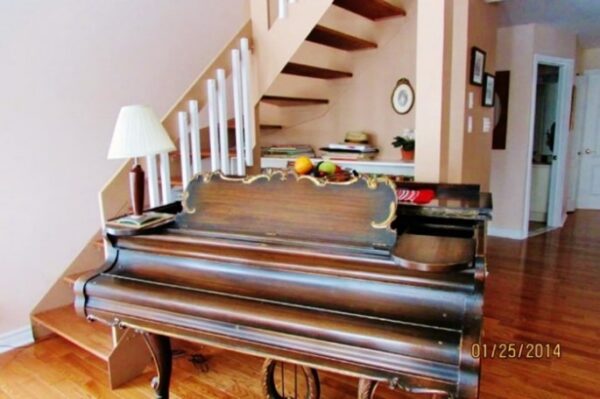
By Christmas, using both my cochlear implant and hearing aid, I was able to enjoy grade 10 piano repertoire. I have some advantages that help music sound great – my piano is a quality instrument, made 101 years ago. I also have a cathedral ceiling in my living room, which helps with acoustics. When I try to listen to music on other devices, including direct streaming2, I sometimes still struggle. But I am thrilled because prior to getting my cochlear implant, I could only hear 66 out of the 88 keys on my piano. With my hybrid CI, I hear all 88 notes!
Long ago, I learned that playing an instrument is a full workout for the brain, whether the player is young or old, hearing or hearing impaired. In fact, simply listening to music can be almost as good a workout as actually playing it. I would encourage anyone with hearing loss who plays an instrument to continue fostering the love of music.
Start by playing a simple, familiar melody, and repeat, repeat, repeat. With a little patience and time, your ability to hear, recognize and appreciate music will improve. Even if you don’t play an instrument, listening to simple, familiar melodies can help you learn to enjoy music with a cochlear implant. Best of luck!”
Are you interested in more tips and tricks to enjoy listening to music with a cochlear implant? Visit our Rehabilitation Resources website to learn more.
- ReSound is a trademark of GN Hearing A/S.
- For compatibility information and devices visit: cochlear.com/compatibility and resound.com/compatibility
